
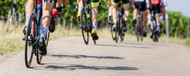
Olympic Cycling: A Complete Guide to Every Event at the Games
Posted by 1UP USA on Jan 26th 2026

Olympic Cycling: Your Complete Guide to Every Event at the Games
Every four years, the world's fastest riders gather to compete for gold, silver, and bronze medals in one of the most thrilling showcases of athletic ability. Olympic cycling has been part of the Games since 1896, and it has only grown more exciting over the years. Winning an Olympic medal in cycling is the dream of riders worldwide, with the gold medal representing the ultimate achievement in the sport.
From velodromes to mountain trails and city streets, Olympic cycling offers something for every type of cycling fan. This guide breaks down everything you need to know about cycling at the Olympic Games, including all the different disciplines, how they work, and what makes each one unique.
A Brief History of Olympic Cycling

Cycling made its Olympic debut at the 1896 Athens Games, making it one of the original sports in the modern Olympic program. Back then, there were just a handful of road and track events. Over the years, the sport has expanded to include new disciplines that showcase different styles of riding and attract new generations of fans.
Key Milestones in Olympic Cycling
• 1896: Cycling debuts at the Athens Games with road and track events
• 1988: Women's track cycling events are added to the program
• 1996: Mountain bike racing joins the Olympics
• 2008: BMX racing makes its Olympic debut
• 2020: BMX freestyle park is added at the Tokyo Games
The Four Olympic Cycling Disciplines

Olympic cycling is governed by the Union Cycliste Internationale (UCI), the international cycling committee that oversees all competitive cycling worldwide. The Olympic program currently includes four distinct disciplines. National federations like USA Cycling work year-round to develop athletes and help them qualify through the Olympic ranking system.
Discipline | Where It Happens | Total Events |
Public roads and highways | 4 | |
Indoor velodrome | 12 | |
Off-road trails | 2 | |
BMX | 4 |
Road Cycling Events
Road cycling is probably what most people picture when they think of bike racing. These events take place on public roads with challenging terrain, and they often feature some of the most dramatic finishes in all of Olympic competition.
Road Race
The road race is a mass-start event where all riders begin together. The first rider to cross the finish line wins. The men's race typically covers a longer distance than the women's event, but both feature the same intense competition.
• Men's distance: 200+ kilometers
• Women's distance: 130+ kilometers
• Strategy: Riders work in groups to conserve energy before making their move in the final kilometers
Individual Time Trial
The time trial is often called the "race of truth" because riders compete alone against the clock. Each cyclist starts at intervals and races the same course, with the fastest time winning. This event rewards raw power and maintaining the fastest pace without drafting. There is nowhere to hide in a time trial, making it a true test of individual ability.
• Equipment: Specialized aerodynamic bikes and helmets
• No drafting: Riders must rely entirely on their own power
Track Cycling Events
Track cycling takes place inside a velodrome on a banked oval track. The bikes used have no brakes and a fixed gear, meaning the pedals are always turning when the wheels move. Riders slow down by resisting the pedals; The smooth, controlled velodrome environment makes mechanical brakes unnecessary.
Track cycling features more medal events than any other cycling discipline at the Olympics. Events are divided into sprint events that reward explosive power and endurance events that test sustained effort. A track cyclist must master both speed and tactical racing to succeed.
Sprint Events
Event | How It Works |
Individual Sprint | Head-to-head race over three laps with intense tactical battles |
Team Sprint | Teams take turns leading before peeling off; The last rider's time counts |
Keirin | Riders follow a motorized pacer, then sprint the final laps |
Endurance Events
Event | How It Works |
Team Pursuit | Two teams start on opposite sides; The goal is to catch the other team or post the fastest time |
Individual Pursuit | Solo riders race against each other from opposite sides of the track |
Madison | Tag-team event where pairs exchange by slinging partners into the race |
The Omnium
The omnium is track cycling's version of a decathlon. Riders earn points across four different races: scratch race, tempo race, elimination race, and points race.
Mountain Bike Events
Mountain biking joined the Olympic program in 1996 and has become a fan favorite. The cross-country (XCO) event is the only mountain bike discipline at the Olympics, showcasing incredible athleticism on rugged natural terrain.
What Makes Cross-Country Racing Unique
• Course features: Steep climbs, rocky descents, and technical obstacles
• Race duration: 90 minutes to two hours
• Start format: Mass start with the entire field together
• Key difference from road: Individual effort matters more due to narrow, technical trails
BMX Events
BMX brought a burst of energy to the Olympic cycling program and quickly became a fan favorite. There are now two distinct BMX disciplines that showcase very different skills.
BMX Racing
Eight riders battle down a course filled with jumps, berms, and rollers. Races are short, intense, and unpredictable.
• Race length: 30 to 40 seconds
• Format: Qualifying rounds leading to the final
• Winning: First rider across the line takes gold
BMX Freestyle Park
BMX freestyle is the newest cycling event, making its debut at Tokyo 2020. Riders perform tricks on a course filled with ramps, walls, and other features.
• Scoring: Judges evaluate difficulty, execution, and creativity
• Winner: Highest score takes gold
Complete List of Olympic Cycling Medal Events

Here is the full breakdown of cycling events where athletes from the United States and around the world compete for Olympic medals:
Discipline | Events (Men's and Women's) |
Road | Road Race, Individual Time Trial |
Track | Team Sprint, Sprint, Keirin, Team Pursuit, Individual Pursuit, Madison, Omnium |
Mountain Bike | Cross-Country |
BMX Racing | Individual |
BMX Freestyle | Park |
What Makes Olympic Cycling So Exciting
Olympic cycling offers something different from professional cycling tours. The stakes are higher, the competition is fiercer, and athletes raise their performance to another level when representing their countries. National pride adds an intensity that you simply do not see in other competitions. Every race feels like it matters because for many athletes, this is their one chance to stand on the Olympic podium.
Why Fans Love It
• Track cycling: Non-stop action with incredible speed inside a packed velodrome
• Road events: Long-distance drama where anything can happen on the final sprint
• Mountain bike: Technical skill on display over challenging natural terrain
• BMX: High-energy racing and jaw-dropping freestyle tricks
Get Inspired and Get Riding
Watching Olympic cycling is a great way to fuel your passion for riding. Seeing the world's best athletes push themselves to the limit makes you want to chase your own next ride; Whether that's a new trail, a longer route, or a goal you've been putting off.
At 1UP USA, we're cyclists too. We know that feeling of wanting to get out and ride after watching incredible performances. That's why we design and build our bike racks right here in the USA, so you can get your bike wherever inspiration takes you.
Why Cyclists Trust 1UP USA Bike Racks
• Protects your bike: Our racks only touch wear points, so no scratched frames or damaged carbon
• Built to last: Every single part is replaceable, so your investment keeps working for years
• Made in the USA: Designed and manufactured in Wisconsin with quality materials
Ready to chase that post-Olympics motivation? Check out our lineup of bike racks and find the perfect fit for your vehicle and riding style.