
How to Change a Bike Tire: Your Complete Guide
Posted by 1UP USA on Jan 14th 2026

How to Change a Bike Tire: Your Complete Guide
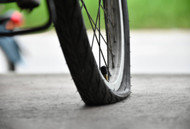
Flat tires happen. And when they do, knowing how to change a bike tire yourself means you're never stranded. It's one of those bike maintenance skills that every cyclist should have in their back pocket; Simple to learn, easy to do with a little practice, and guaranteed to come in handy sooner or later.
And here's the good news: most flats don't actually require replacing the rubber tire itself. In most cases, you just need to swap out the inner tube, which is quicker, easier, and a lot cheaper than replacing the whole tire.
What You'll Need
Before you hit the road, make sure you have these items in your repair kit. Most of these fit easily in a small saddle bag or backpack.
Tool | Purpose |
Tire levers (2-3) | Pry the tire bead away from the wheel rim |
Spare tube or patch kit | Replace or repair the damaged inner tube |
Hand pump or CO2 inflator | Inflate the new tube to the recommended PSI |
Multi-tool with wrench | Loosen axle nuts if you don't have quick-release |
Pro tip: Always carry a spare tube that matches your tire size and valve type. Ensure you know whether you have a Presta or Schrader valve, and that your pump or inflator is compatible.

Step 1: Remove the Wheel
First things first: you need to get the wheel off your bike. If you're dealing with a rear tire, shift your chain onto the smallest cog (the smallest ring on your cassette) before removing the wheel. This makes reinstallation much easier.
For Quick-Release Wheels
2. Unscrew the lever a few turns if needed to clear the fork or frame
3. Lift the wheel out of the dropouts
For Thru-Axle Wheels
2. Pull the axle out and set it aside
3. Remove the wheel from the frame
If you're working on the rear wheel, you may need to pull back on the rear derailleur to free the wheel from the chain. For the front wheel, check that your brake pads (if using rim brakes) aren't blocking the tire.
Step 2: Deflate and Remove the Tire
If your tire still has some air, press down on the valve stem to release any remaining pressure.
• For Presta valves, unscrew the small nut at the top first, then press down.
• For Schrader valves, use something small to press the pin inside the valve.
Now grab your tire levers.
2. Hook this first lever onto a spoke to keep it in place.
3. Insert a second lever a few inches away and do the same thing.
4. Slide this second lever around the rim to unseat one side of the tire completely.
5. Once one side of the tire bead is off the rim, reach in and pull out the inner tube.
a. Start at the valve stem. Push it through the hole in the rim first, then work your way around.
Step 3: Find What Caused the Flat
Before you install a new tube, take a minute to figure out what caused your flat tire. Run your fingers carefully along the inside of the tire, feeling for any sharp object that might still be lodged there: glass, thorns, staples, or wire. Check the outside of the tire too. A sharp edge left in the tire will just puncture your replacement tube.
While you're at it, inspect the rim tape that covers the spoke holes on the inside of your wheel rim. If it's torn or shifted, it can expose sharp edges that cause flats. Replace damaged rim tape before installing a new tube.
If you want to find the exact puncture location on your old tube, inflate it slightly and listen for escaping air, or submerge it in water and look for bubbles.
Step 4: Install the New Tube
Take your spare tube and inflate it just slightly enough to give it shape, but not enough to make it firm. This helps prevent pinching the tube between the tire and rim during installation.
2. Tuck the rest of the bike tube into the tire, working your way around the wheel in both directions
3. Make sure the tube isn't twisted or bunched up anywhere
4. Push the valve stem up into the tire briefly, then pull it back down to ensure the tube isn't caught under the bead near the valve
Step 5: Reseat the Tire
Now comes the part that can be tricky: getting the tire bead back onto the rim. Start at the valve stem and work your way around the wheel, pushing the tyre bead over the edge of the rim with your thumbs. Work in both directions, meeting at the point opposite the valve.
The last few inches can be tough. Resist the urge to use tire irons or a tyre lever to force the bead over; You risk pinching and puncturing your new tube. Instead, push the already-seated portion of the tire toward the center of the rim. This gives you more slack to work with at the tight spot.
Once the tire is fully seated, go around the entire wheel and check that the tube isn't pinched between the tire bead and the rim. Look for any bulges or spots where the tube is visible.
Step 6: Inflate and Check
Grab your hand pump or CO2 inflator and start adding air. Inflate slowly at first, checking that the tire is seating evenly on the rim. Look at both sides of the tire as it inflates; There should be a consistent line where the tire meets the rim all the way around.
Fill the tire to the proper tire pressure. You'll find the recommended PSI printed on the sidewall of your bicycle tire. Road bikes typically run 80-120 PSI, while mountain bikes usually run 25-35 PSI, depending on terrain and rider preference.
Typical Tire Pressure Ranges
Bike Type | Recommended PSI |
Road bike | 80-120 PSI |
Mountain bike | 25-35 PSI |
Hybrid/Commuter | 50-70 PSI |
Gravel bike | 35-55 PSI |
Step 7: Reinstall the Wheel
With your tire inflated and ready to roll, it's time to put the wheel back on the bike.
For the front wheel, simply drop it into the fork dropouts and secure the quick-release lever or thru-axle. Make sure the wheel is centered between the fork legs before tightening.
For the rear wheel, loop the chain over the smallest cog, then guide the wheel into the dropouts. Pull back on the rear derailleur if needed to create slack in the chain.
Once the wheel is seated, secure your quick-release lever or thru-axle.
Give the wheel a spin to make sure it's centered and not rubbing on the brake pad or frame. Lastly, check that your brakes are working properly before heading out.
A Note on Tubeless Tires
If you're running a tubeless setup, the process is a bit different. Tubeless tires use sealant inside the tire instead of an inner tube, and small punctures often seal themselves while you ride. For larger punctures, you can use a tubeless plug kit to repair the tire on the trail.
However, carrying a spare tube is still smart even with a tubeless tire. If you get a gash or puncture that won't seal, you can remove the valve stem, install a tube, and ride home. It's always good to have a backup plan.
Tips for Faster, Easier Tire Changes

• Practice at home first: Changing a tire in your garage is much less stressful than doing it on the side of a trail or road.
• Check your spare tube before every ride: Old tubes can develop slow leaks just from sitting in your bag.
• Invest in puncture protection tires: They're heavier, but the peace of mind is worth it for those who ride often.
• Keep your tires properly inflated: Underinflated tires are more prone to pinch flats.
• If you're struggling with a tight tire: Let a little air out of the tube before attempting to seat the last bit of bead.
When to Replace Instead of Repair

Sometimes a repair isn't enough. Here are signs you need a new tire rather than just a new tube:
• Visible threads showing through worn rubber
• Cuts or gashes in the sidewall
• Cracking or dry rot from age
• Repeated flats in the same location
• Bulges or deformities in the tire shape
Your local bike shop can help you choose a replacement tire that matches your riding style and needs.
Get Back to Riding

Flat tires are part of cycling, but they don't have to ruin your day. With the right tools and a little practice, you can handle a flat anywhere and get back to enjoying your ride. Keep a spare tube, some tire levers, and a hand pump in your kit, and you'll be ready for whatever the road or trail throws at you.
Here at 1UP USA, we know you put a lot of care into your bike and your bike maintenance skills. That's why we put the same level of care into building our bike racks. Made right here in the USA from quality aluminum, our racks are designed to transport your bike safely to your next adventure, whether that's a local trail or a cross-country road trip. Every part is replaceable, so your rack can last as long as your love for cycling. When you're ready to take your bike somewhere new, check out our full collection of bike racks and find the perfect fit for your vehicle and riding style.