
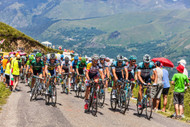
Your Introduction to the Tour de France
Posted by 1UP USA on Jan 23rd 2026

Your Introduction to the Tour de France
The Short Answer: The Tour de France covers approximately 3,500 kilometers (about 2,175 miles) over 21 stages spanning 23 days, including two rest days. Individual stages range from short time trials of around 25 kilometers to flat stages exceeding 200 kilometers.
Le Tour stands as the world's most prestigious cycling race and the crown jewel of the Grand Tour circuit, which also includes the Giro d'Italia and Vuelta a España. The inaugural Tour in 1903 changed cycling forever, and today millions of fans line the roads from the Grand Depart to the final stage on the Avenue des Champs-Élysées in Paris.
For any cycling enthusiast, whether you dream of racing or simply enjoy a long ride on the weekend, understanding the Tour de France adds a whole new dimension to your appreciation of the sport.
How Long is the Tour de France?
The Tour de France total distance typically falls between 3,400 and 3,600 kilometers each year. The exact route changes annually, but the format remains consistent: 21 stages raced over 23 days, with two rest days built in to help riders recover from the grueling effort.
Breaking Down the Numbers

For perspective, the first Tour in 1903 covered 2,428 kilometers in just six stages, with an average stage distance exceeding 400 kilometers. Today's race is longer overall but broken into more manageable daily chunks, though "manageable" is relative when you're climbing Alpine mountain passes at a 7-10% average gradient.
Types of Stages in the Tour
Not all stages are created equal. The Tour features a variety of terrain that tests different skills and creates opportunities for different types of riders.
Flat Stages
A flat stage typically ends in a sprint finish, where the fastest riders in the peloton battle for the finish line at speeds exceeding 60 km/h. Sprinters like Mark Cavendish, who holds the record with 35 stage wins, thrive on these days. The peloton usually stays together through most of the stage before an explosive final few kilometers.
Hilly Stages
Hilly stages feature rolling terrain with categorized climbs that are not severe enough to be classified as mountain stages. These days often see breakaways succeed, and the intermediate sprints scattered throughout provide opportunities for points classification contenders to score.
Mountain Stages
The mountain stage is where Tour dreams are made or broken. When the race tackles legendary climbs like Alpe d'Huez with its 21 hairpin turns or crosses a mountain pass like the Col du Tourmalet, only the strongest climbers survive. A summit finish on one of these climbs often determines who becomes the eventual winner of the general classification. The typical mountain stage includes 3,000-5,000 meters of total elevation gain.
Individual Time Trials
In an individual time trial, each rider races alone against the clock. These stages range from short prologues of about 10 kilometers to longer tests of around 40 kilometers. Time trials are often called the "race of truth" because there's nowhere to hide from your own legs and lungs. The final stage of modern Tours often ends with a time trial, which can create dramatic last-day showdowns for the general classification.
Legendary Climbs of the Tour

Certain climbs have become synonymous with Tour de France drama. These mountains have witnessed the greatest battles between the sport's champions.
Perhaps the most famous climb in cycling, Alpe d'Huez features 21 numbered hairpin turns climbing 13.8 kilometers at an average gradient of 8.1%. Each hairpin is named after a stage winner. Dutch Corner at hairpin 7 becomes a sea of orange when the Tour visits, celebrating the Netherlands' rich history on this climb. The mountain hosted the Tour's first-ever summit finish in 1952 when Fausto Coppi conquered it en route to overall victory.
The Tourmalet has appeared in the Tour more than any other climb. At 2,115 meters in elevation, this Pyrenean giant tests riders with 19 kilometers of climbing at an average gradient near 7.5%. Its exposed slopes at altitude create unpredictable conditions that have decided many general classification battles.
Known as the "Beast of Provence" or the "Bald Mountain" for its barren summit, Mont Ventoux rises 1,909 meters and offers no shelter from sun or wind in its final lunar-like kilometers. The climb has witnessed both triumph and tragedy throughout Tour history.
Understanding the Tour's Special Jerseys
The Tour awards several classifications, each with its own special jersey that the leader wears during stages.

The Yellow Jersey (Maillot Jaune)
The yellow jersey represents the leader of the general classification, the rider with the lowest cumulative time across all stages. This is the big prize, the one every team leader covets. Legends like Eddy Merckx, Bernard Hinault, and Tadej Pogačar have worn it on their way to multiple Tour victories. The maillot jaune's yellow color originated from the yellow pages of L'Auto, the newspaper that created the race.
The Green Jersey (Maillot Vert)
The green jersey goes to the leader of the points classification. Riders earn points for high finishes in stages and for winning intermediate sprints during stages. This is traditionally the sprinters' competition, rewarding consistent performance in flat stage finishes.
The Polka Dot Jersey
The famous polka dot jersey identifies the leader of the mountain classification, known as the King of the Mountains. The first rider to cross the summit of each categorized climb earns points, with more points awarded for harder climbs. Climbs are rated from Category 4 (easiest) to Category 1 and Hors Categorie (beyond category) for the most demanding mountain passes.
The White Jersey
The white jersey goes to the best young rider in the general classification, awarded to the top finisher under 26 years old. Many yellow jersey winners first showed their potential by claiming this competition early in their careers.
Team Classification
Beyond individual glory, the team classification recognizes the squad with the best combined times among its top three finishers each day. The winning team's riders wear yellow numbers throughout the race. Cycling is an individual sport wrapped in a team format, and the team classification reflects how success often depends on teammates sacrificing their own chances to support their team leader.
Legends Who Shaped the Tour
Four riders share the record of five overall Tour victories: Jacques Anquetil, Eddy Merckx, Bernard Hinault, and Miguel Indurain. Each dominated their era and left an indelible mark on the race.
Eddy Merckx, nicknamed "The Cannibal" for his insatiable hunger to win everything, wore the yellow jersey for 96 days across his career. In 1969, he achieved what no rider has matched since: winning the general classification, points classification, and mountain classification in the same race.
Bernard Hinault brought a fierce French pride to the race in the late 1970s and 1980s. Modern champions like Tadej Pogačar continue to add new chapters to Tour history. Pogačar completed the rare Giro d'Italia and Tour de France double in 2024, the first rider since Marco Pantani in 1998 to achieve this feat.
The women's race returned in 2022 as the Tour de France Femmes, bringing elite women's racing back to the world's biggest cycling stage. The eight-stage race typically follows the final week of the men's race and tackles equally challenging terrain, giving female riders the recognition they deserve on cycling's grandest stage.

Bringing it Home
The Tour de France covers approximately 3,500 kilometers over 23 days, but it represents so much more than distance. From the Grand Depart to the final stage on the Champs-Élysées, le Tour showcases human endurance, strategy, and the pure joy of cycling. Whether you're watching your favorite rider chase the maillot jaune or tackling your own long ride on a weekend, the Tour reminds us why we love being on two wheels.
Ready to make your own cycling adventures easier? 1UP USA bike racks are designed to get you and your bike to your next destination safely and securely. Built in the USA with lightweight aluminum construction and anti-wobble technology, our racks make transporting your bike as effortless as possible. Browse our full selection of bike racks and find the perfect match for your vehicle and cycling lifestyle.