
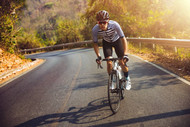
What Muscles Does Biking Work?
Posted by 1UP USA on Feb 3rd 2026

What Muscles Does Biking Work?
At a Glance: Biking is a full-body workout that primarily targets your quads, hamstrings, glutes, and calves, while also engaging your core muscles and upper body for stability and control.
Every pedal stroke recruits multiple muscle groups working together. Your lower body generates power, your core keeps you balanced, and your upper body steers you through the ride. Whether you prefer outdoor cycling, indoor cycling on a stationary bike, or mountain biking on rugged terrain, cycling builds both muscle strength and muscular endurance.
How Riding Style Changes Muscle Activation
The way you ride changes which specific muscles do the heavy lifting.
Outdoor Cycling vs. Indoor Cycling

Outdoor cycling engages your full body as you navigate real-world terrain. Road biking keeps your focus on the lower body muscles, with consistent pedaling patterns that work the quads, hamstrings, and gluteus maximus. Smooth pavement lets you maintain a steady cadence, which builds muscular endurance.
Indoor cycling on a stationary bike or exercise bike offers a controlled environment where you can focus on specific muscles without worrying about balance or terrain. A recumbent bike shifts the emphasis slightly, reducing upper body engagement and strain on the lower back while still delivering a solid lower body workout.
Mountain Biking
Mountain biking tells a different story entirely. The unpredictable terrain forces constant adjustments.
What makes mountain biking unique:
• Recruits your core muscles far more intensely as you brace against sudden movements
• Arms, shoulders, and upper body muscles work overtime gripping handlebars through rough sections
• A mountain bike demands more from your whole body than road riding
Intensity and Resistance Effects
Hill climbing transforms your legs into powerhouses. When you tackle inclines, your gluteal muscles and hamstrings take on bigger roles to generate extra force. The quadriceps muscle group still works hard, but the posterior chain activates more to drive each pedal stroke against gravity.
Sprint intervals vs. Endurance Rides:
Type | Muscle Fibers | Result |
Sprints | Fast-twitch: explosive power, fatigue quickly | Builds muscle strength and muscle mass |
Endurance | Slow-twitch: sustained effort | Develops muscular endurance |
Regular cycling at high intensity can stimulate muscle hypertrophy, particularly in the primary muscles of the legs. However, cycling is primarily a low-impact exercise that builds endurance rather than significant muscle mass compared to strength training.
Cadence Effects
• Lower cadence with higher resistance — places more load on your muscles, particularly the quads, building strength but risking fatigue
• Higher cadence with lighter resistance — spreads work across more muscle groups and reduces strain on any single area
Cycling Builds Strength and Endurance Across Your Entire Body
Biking delivers a full-body workout that strengthens your legs, core, and cardiovascular system while being easy on your joints. Every pedal stroke engages your quads, hamstrings, glutes, and calves, while your core and back muscles work constantly to stabilize your body and maintain balance.
The Lower Body Powerhouses: Your Primary Pedaling Muscles
Your lower body muscles do the heavy lifting on every ride. Each pedal stroke creates a coordinated effort that propels you forward mile after mile.
Quadriceps (Front Thighs)
Your quadriceps muscle group dominates the downstroke when you push the pedal toward the ground. This pushing phase generates most of your power output, which explains why your quads often feel the burn first during a tough cycling workout.
Four distinct muscles make up this group:
• Vastus lateralis - outer thigh
• Vastus medialis - inner thigh
• Vastus intermedius - center
• Rectus femoris - runs down the middle
All four activate during that powerful downward push. The harder you push, the more these leg muscles engage to deliver the force you need.
Hamstrings (Back Thighs)
Your hamstrings run along the back of your thighs and activate during the upstroke and back portion of the pedal cycle. They pull your foot through the bottom of the pedal stroke and help lift the pedal back toward the top.
The hamstrings work in partnership with the quadriceps throughout each rotation. This tag-team approach creates smoother, more efficient pedaling and prevents your quads from shouldering the entire workload alone.
Glutes (Buttocks)
Your gluteal muscles are the powerhouses behind explosive efforts on the bike.
Muscle | Function |
Gluteus maximus | Generates substantial force during the downstroke, especially during standing climbs and sprints |
Gluteus medius | Stabilizes hips and keeps legs aligned during each rotation |
Together, these muscles turn your hips into a stable platform for generating and transferring power to the pedals.
Calves (Lower Legs)
Your calf muscles might be smaller, but they're constantly engaged throughout your ride. The gastrocnemius and soleus control ankle movement as you point and flex your foot during each pedal stroke.
Proper foot positioning makes a difference in how effectively your calf muscle contributes. When your foot remains relatively level rather than pointing excessively downward, your calves work more efficiently without fatiguing prematurely.

Supporting Cast: Core and Stabilizer Muscles
Your legs get most of the glory, but a whole team of supporting muscles keeps you stable and moving efficiently.
Core Muscles
Your abdominal muscles and oblique muscles act like a natural suspension system. The rectus abdominis and transverse abdominis keep your torso stable while your legs power through each pedal stroke.
Your lower back muscles, including the erector spinae, support your spine and help you hold proper posture mile after mile. A strong core translates directly to better efficiency and can help prevent lower back pain. Building core strength through regular cycling also supports upright posture off the bike.
Hip Flexors
The iliopsoas, your primary hip flexor, plays a crucial role every time you lift your knee during the upward phase of your pedal stroke. This muscle group connects your lower spine to your upper thigh, pulling your leg up to complete the circular pedaling motion.
However, spending hours in the bent-forward cycling position can leave these hip flexor muscles chronically tight, which is why many cyclists experience hip stiffness after long rides.
Stabilizer Muscles
Your riding position completely changes, which stabilizer muscles kick into action.

Upper Body Involvement
Your upper body works harder than you might think. Every time you grab those handlebars and lean into a ride, multiple muscle groups activate to keep you stable and in control.
Arms and Shoulders
Your forearms and biceps maintain constant tension to grip the handlebars. Your shoulders act as natural shock absorbers, with your deltoids working to stabilize your arms and cushion impacts. When you stand up for a climb or power through a sprint, your triceps engage as you pull against the handlebars for leverage.
Back and Chest Muscles
The forward-leaning position of cycling demands consistent work from your upper and mid-back.
Key back muscles at work:
• Trapezius — holds your torso steady and supports head position
• Latissimus dorsi — maintains riding posture and prevents slouching
Your pectoral muscles provide stability to your torso and activate more noticeably during aggressive riding positions or when pulling hard on the handlebars during climbs. Strong upper body muscles translate directly to more comfortable, efficient riding over distance.
Tips for Balanced Muscle Development
A saddle that's too low overworks your quads while underusing your glutes and hamstrings. Handlebars positioned incorrectly can create tension in your neck and shoulders. Dialing in your position helps distribute effort properly across all the right muscle groups.
Vary Your Workout Routine
Mix outdoor cycling with indoor cycling sessions on a stationary bike or exercise bike. Adding strength training targets muscles that cycling alone neglects, while exercises for your core muscles and upper body muscles create better balance and power on the bike.
Stretch and Recover
Your hip flexor muscles, quads, and hamstrings get tight from hours in the saddle. Foam rolling after rides helps release tension, while dedicated stretching sessions keep muscles supple. Rest days give muscle fibers time to repair and grow stronger.
Every Ride Counts
Biking works your body from the ground up. Your quads, hamstrings, gluteus maximus, and calf muscles power every pedal stroke. Your core muscles hold everything stable. Your upper body steers you through the ride.
The muscles you work depend on how you ride. Whether you prefer outdoor cycling or indoor cycling on an exercise bike, regular bike riding delivers a comprehensive workout that builds muscle strength and muscular endurance. Proper bike setup lets your muscles work at their best, so you ride more comfortably and efficiently.
Ready to take your cycling further? 1UP USA bike racks make it easy to bring your bike anywhere, whether you're chasing new trails, exploring scenic routes, or just getting to your favorite riding spot. Need gear to keep your ride in top shape? Check out our accessories and replacement parts to get the most out of every mile. Browse our bike racks to find the perfect fit for your next adventure.