
How Long Do Bike Tires Last?
Posted by 1UP USA on Dec 4th 2025

How Long Do Bike Tires Last?
So you've been putting some serious miles on your bike, and now you're wondering: how long do bike tires actually last? It's a fair question, and the answer depends on multiple factors. Your riding style, the terrain you tackle, and even how you store your bike all play a role in tire lifespan.
Whether you're cruising on smooth pavement or bombing down off-road trails, understanding when to swap out your tires keeps you rolling safely and efficiently. Let's break down everything you need to know about tire wear, replacement timing, and getting the most miles out of your rubber.
The General Lifespan of Different Bike Tires
Not all bicycle tires are created equal, and their expected lifespan varies quite a bit depending on the type. Here's a general breakdown of what you can expect from different tire categories:

Keep in mind these are ballpark figures. A road bike tire ridden exclusively on glass-free bike paths will outlast one that's battling city streets filled with debris. Similarly, a mountain bike tire used mainly for cross-country rides will hold up longer than one used for aggressive downhill sessions.
What Affects How Long Your Tires Last?
Tire lifespan isn't just about miles traveled. Several factors can speed up or slow down how quickly you'll need a new tire.

Riding Conditions and Terrain
The surfaces you ride on make a huge difference. Smooth pavement is gentler on tires than rough terrain filled with rocks, roots, and gravel. Off-road conditions naturally accelerate tread wear, especially if you're tackling technical trails. Rough surfaces can also cause small cuts and abrasions in the rubber compound that lead to premature wear over time.
If you're a gravel bike enthusiast or spend weekends mountain biking, expect to replace tires more frequently than someone who sticks to paved paths.
Tire Pressure Matters More Than You Think
Running the wrong tire pressure is one of the fastest ways to wear out your tires. Too much pressure creates a smaller contact patch, wearing out the center of your tire faster and reducing grip. Too little pressure causes the sidewalls to flex excessively, leading to premature wear and increased flat tire risk.
Check your tire's sidewall for the recommended PSI range and stay within it. For reference, road tires typically run at higher pressures (80-130 PSI), while mountain bike tires use lower pressure (30-50 PSI) for better traction on rough surfaces.
Your Riding Style
Hard braking, aggressive cornering, and frequent skidding all take a toll on your tires. If you're the type who likes to push limits and ride hard, your tires will show it. Wheel lock-ups from sudden braking create flat spots that compromise tire integrity and can make rides feel bumpy.
Smoother, more controlled riding extends tire life significantly. That doesn't mean you need to ride like you're transporting fine china, but being mindful of how your riding habits affect wear helps.
Front vs. Rear Tire Wear
Here's something many riders don't realize: your rear tire wears out faster than your front tire. The back tire handles most of the power transfer when you pedal, plus it carries more of your weight. Expect your rear wheel's tire to need replacement about twice as often as the front.
Some cyclists rotate their tires (moving the front to the back) to even out wear, though this is more common with similar tread patterns. If you notice significant wear differences, consider swapping a quality tire from the front to the back when the rear is worn.
Environmental Factors
Extreme temperatures and direct sunlight can degrade tire rubber even when you're not riding. UV exposure breaks down the rubber compound over time, causing it to crack and harden. If your bike sits outside or near windows, the tires age faster than those stored in a cool, dark space.
Hot pavement in summer also accelerates wear, while cold temperatures can make rubber less pliable and more prone to cracking.
Signs It's Time for a New Tire
Mileage estimates are helpful, but visual inspection tells you the real story. Here's what to look for when checking if your tires are ready for retirement:
Worn tread indicators: Many tires have small wear indicator grooves or dimples. When these disappear, it's time for a new tire.
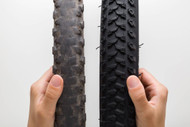
Squared-off profile: A new tire has a rounded profile. When it becomes flat or squared off, you've worn through the primary tread.
Visible casing or threads: If you can see the fabric casing beneath the rubber, stop riding immediately. This worn-out tire is a blowout waiting to happen.
Cracks in the sidewall: Small cracks indicate age-related deterioration, even if the tread looks fine.
Frequent flats: If you're patching your inner tube constantly, the tire's puncture resistance has likely deteriorated.
Bulges or deformities: Any bulging indicates internal damage that compromises structural integrity.
Special Considerations by Bike Type
Electric Bike Tires
Electric bikes present unique challenges for tires. The added weight of the motor and battery, combined with higher average speeds, puts extra stress on e-bike tires. Many manufacturers now offer specific electric bike tire designs with reinforced construction to handle these demands.
If you ride an e-bike, investing in tires designed for electric bikes pays off in longevity and safety. Standard tires may wear faster and feel less stable under the increased loads.
Tubeless Tires
Tubeless tire setups have gained popularity among mountain bikers and road cyclists alike. Without an inner tube, these tires can run at lower pressure for better traction while the liquid sealant inside automatically plugs small punctures.
Tubeless tires often last longer than their tubed counterparts since there's no friction between the tube and tire. However, you'll need to refresh the sealant every few months to maintain puncture protection. The tire itself still wears based on the same factors as standard tires.
Extending Your Tire Lifespan

Want to squeeze more miles out of your rubber? A little proper care goes a long way:
Maintain proper inflation: Check tire pressure before every ride. It takes 30 seconds and prevents uneven wear.
Store your bike properly: Keep it away from direct sunlight and extreme temperatures. Indoor storage is ideal.
Clean your tires regularly: Remove embedded debris that can work its way deeper with each ride.
Inspect after rough rides: Check for cuts, embedded glass, or other damage that could become bigger problems.
Choose quality tires: Spending a bit more on a quality tire often means better rubber compounds and longer life.
When to Replace vs. When to Repair
Not every issue requires a new tire. Small punctures, especially in tubeless setups, often seal themselves or can be patched. But some damage means it's time to retire that tire for good.
Repairable | Replace Immediately |
Small punctures in the tread | Sidewall cuts or damage |
Minor surface cuts (not through casing) | Visible casing or threads |
Slow leaks from the valve or bead | Bulges or deformities |
Single flat from road debris | Cracked or hardened rubber |
What About Age?
Even if your tires look perfect, rubber degrades over time. Most manufacturers recommend replacing bike tyres after 5-6 years, regardless of tread depth. The rubber compound hardens and loses its grip properties, even if the tire has been sitting in perfect storage conditions.
If you buy a bike that's been sitting in a shop for a couple of years, check the tire manufacturer's date (usually stamped on the sidewall). You might be starting with tires that are already partway through their lifespan.
Don't Forget Your Flat Tire Kit
Even with perfect tires and proper care, flats can still happen. Always carry the basics:
• Spare inner tube (or tubeless repair kit)
• Tire levers
• Mini pump or CO2 inflator
• Patch kit as backup
Being stranded miles from home because of a flat tire you couldn't fix is no fun for anyone.
Keep Rolling with Confidence
Understanding tire wear and knowing when to replace your rubber keeps you riding safely mile after mile. Pay attention to the signs, maintain proper care, and don't push worn tires past their limits. Your bike, and your safety, are worth the investment in fresh rubber when the time comes.
At 1UP USA, we know you've invested in your bike and want to take care of it. That same attention to quality should extend to how you transport your ride. Our bike racks are designed and built in the USA from premium materials with replaceable parts. Whether you're hauling your road bike to a century ride or your mountain bike to the trailhead, our racks protect your investment with the same care you put into maintaining it.
Ready to get your bike to its next adventure? Check out our full collection of bike racks and find the perfect fit for your vehicle and riding style. Because you didn't invest in quality tires just to trust a flimsy rack with your bike.